Thursday, September 23, 2010

Affiliate Making Money

It was last November that we first heard about Chomp, a sort-of Yelp for iPhone apps. At the time, it was still very much in stealth mode, but we kept hearing they raised a seed round of funding from investors like Ron Conway insanely fast. Obviously, we were interested.


By January, we had a sneak peak at the actual service. And about a week later, it formally launched as an app recommendation engine for Apple’s App Store. Another larger round of funding quickly followed, and since then Chomp has been off and running with over 400,000 active users at this point. But now it’s time to take things to the next level — with search.


App discovery in the App Store still basically sucks. There’s the main page which Apple’s curates (and does a nice job with). But beyond that it’s pretty much a nightmare. Discovery is continually under attack by developers trying to game the system by putting bogus words in their titles. And with over 250,000 iPhone apps out there now, there simply needs to be a better way to find the best ones.


Of course, that’s what Chomp has been doing. But up until now, they’ve basically only been doing it based on recommendations from your social graph on Chomp. Yes, there has been some basic search functionality, but it has been no better than the one Apple provides (again, pretty lousy). Today brings the launch of a completely revamped search engine for apps. And notably, it’s in both the Chomp app and on chomp.com.


Co-founder Ben Keighran calls this latest version of Chomp “the most personalized way to search and browse for apps.” He notes that the addition of topic-based search is going to change the way people discover apps. “Imagine having to to go Google and search for ‘www.facebook.com’ — rather than just searching for ‘social network’ and having Facebook come up as a result,” is how he puts it.


Competitors like Appsfire are out there also doing search, but they’re also mainly title (and description) based. In Keighran’s mind, this isn’t enough.


He notes that previously beyond simple name searches results would show up based on popularity of the app. While this isn’t the worst way of doing it, Keighran believes the 50 million recommendations that users have already seeded into Chomp will provide a much better way. “We have a lot of data to build a semantic search engine,” Keighran notes. “We have our own Chomp user sentiment.“


He also notes that they have more reviews in many cases than Apple itself does on apps. The reason is that Chomp makes it very easy to do a review — you say whether you hate the app or love it. And if you want, you can leave a 60-word comment.


Keighran also says that Chomp’s system is better than Apple’s own Genius feature for apps because that’s simply based around what you’ve downloaded. This is all about what people you trust enough to add to your social graph have downloaded and love.


All of this points towards Chomp’s larger goals: to be the place people go to find the best apps no matter what platform they’re on. Currently, Chomp only works for native iPhone apps and web apps for the iPhone, but Android and iPad app search/recommendation is in the works.


Keighran sees a future where apps are everywhere, and people need a single place to find the best of them. Yes, kind of like Google for the web. “This is like the web in 1996,” he says. If this future is realized, he envisions Chomp as having 10 million users by the end of next year. A lofty goal, but perhaps not an insane one.


And if they can get to that size, Keighran sees a lot of money to be made. Sponsored search and recommendations will be a huge business — again, at scale. For now, Chomp is making a small amount of money via affiliate fees from Apple every time someone buys an app by way of Chomp.


So what does Apple think about Chomp one-upping them in app discovery? “Apple is insanely excited about this,” Keighran says. Undoubtedly Google is excited for Chomp to come to Android too. Because this is a very real problem across all platforms and one that’s only growing in size.


Here’s all you need to know…


Gavin Newsom is Nancy Pelosi’s nephew.


Nancy Pelosi’s son (Gavin Newsom’s cousin), Paul Pelosi, Jr., heads and advises many of the San Francisco level gov’t agencies and “foundations” (even holding the position of “Special Adviser on the Environment to the Director of the NASA Ames Research Center”) spending SF’s share of stimulus money on federally mandated and nearly fully stimulus funded environmental and algae biofuel projects. Which companies like Honeywell, Solazyme, Unilever, and a dozen or so other SF headquartered corporations and biofuel start-ups are benefiting from. Biofuel projects which were once headed by Obama’s Sec. of Energy, Steven Chu.


SF is desperately trying to become to the biofuel industry, what Houston is to the oil and gas industry. With the progressive’s push to shift America away from conventional energy…one begins to see the benefit of this new sought feather for the city of SF’s cap.


The only thing likely motivating Newsom’s comments is that SF didn’t receive more or all of CA’s share of stimulus. Once all of SF’s progressive elites have begun profiting off their biofuel “investments,” there will be more lobster and bj parties to be had. Win/win for Newsom any way you look at it.


ASEAN <b>News</b> Summary | Live Stock Trading <b>News</b> | Equities, Forex <b>...</b>

Get the best in ASEAN News daily at www.aseanaffairs.com ASEAN Affairs. PTT drops bid for Carrefour PTT Plc of Thailand is dropping its bid to purchase.

Official Google Blog: Google <b>News</b> turns eight

Today we celebrate the eighth birthday of Google News. Not long after the tragic events of September 11, 2001, we started building and testing Google News with the aim of helping you find current events from a wide variety of global and ...

Small Business <b>News</b>: The Times They Are A Changing

In the 60's it was a song of revolution when change was just not as common. Today, it reflects a fact of life, at least for small business owners and.


robert shumake

ASEAN <b>News</b> Summary | Live Stock Trading <b>News</b> | Equities, Forex <b>...</b>

Get the best in ASEAN News daily at www.aseanaffairs.com ASEAN Affairs. PTT drops bid for Carrefour PTT Plc of Thailand is dropping its bid to purchase.

Official Google Blog: Google <b>News</b> turns eight

Today we celebrate the eighth birthday of Google News. Not long after the tragic events of September 11, 2001, we started building and testing Google News with the aim of helping you find current events from a wide variety of global and ...

Small Business <b>News</b>: The Times They Are A Changing

In the 60's it was a song of revolution when change was just not as common. Today, it reflects a fact of life, at least for small business owners and.


It was last November that we first heard about Chomp, a sort-of Yelp for iPhone apps. At the time, it was still very much in stealth mode, but we kept hearing they raised a seed round of funding from investors like Ron Conway insanely fast. Obviously, we were interested.


By January, we had a sneak peak at the actual service. And about a week later, it formally launched as an app recommendation engine for Apple’s App Store. Another larger round of funding quickly followed, and since then Chomp has been off and running with over 400,000 active users at this point. But now it’s time to take things to the next level — with search.


App discovery in the App Store still basically sucks. There’s the main page which Apple’s curates (and does a nice job with). But beyond that it’s pretty much a nightmare. Discovery is continually under attack by developers trying to game the system by putting bogus words in their titles. And with over 250,000 iPhone apps out there now, there simply needs to be a better way to find the best ones.


Of course, that’s what Chomp has been doing. But up until now, they’ve basically only been doing it based on recommendations from your social graph on Chomp. Yes, there has been some basic search functionality, but it has been no better than the one Apple provides (again, pretty lousy). Today brings the launch of a completely revamped search engine for apps. And notably, it’s in both the Chomp app and on chomp.com.


Co-founder Ben Keighran calls this latest version of Chomp “the most personalized way to search and browse for apps.” He notes that the addition of topic-based search is going to change the way people discover apps. “Imagine having to to go Google and search for ‘www.facebook.com’ — rather than just searching for ‘social network’ and having Facebook come up as a result,” is how he puts it.


Competitors like Appsfire are out there also doing search, but they’re also mainly title (and description) based. In Keighran’s mind, this isn’t enough.


He notes that previously beyond simple name searches results would show up based on popularity of the app. While this isn’t the worst way of doing it, Keighran believes the 50 million recommendations that users have already seeded into Chomp will provide a much better way. “We have a lot of data to build a semantic search engine,” Keighran notes. “We have our own Chomp user sentiment.“


He also notes that they have more reviews in many cases than Apple itself does on apps. The reason is that Chomp makes it very easy to do a review — you say whether you hate the app or love it. And if you want, you can leave a 60-word comment.


Keighran also says that Chomp’s system is better than Apple’s own Genius feature for apps because that’s simply based around what you’ve downloaded. This is all about what people you trust enough to add to your social graph have downloaded and love.


All of this points towards Chomp’s larger goals: to be the place people go to find the best apps no matter what platform they’re on. Currently, Chomp only works for native iPhone apps and web apps for the iPhone, but Android and iPad app search/recommendation is in the works.


Keighran sees a future where apps are everywhere, and people need a single place to find the best of them. Yes, kind of like Google for the web. “This is like the web in 1996,” he says. If this future is realized, he envisions Chomp as having 10 million users by the end of next year. A lofty goal, but perhaps not an insane one.


And if they can get to that size, Keighran sees a lot of money to be made. Sponsored search and recommendations will be a huge business — again, at scale. For now, Chomp is making a small amount of money via affiliate fees from Apple every time someone buys an app by way of Chomp.


So what does Apple think about Chomp one-upping them in app discovery? “Apple is insanely excited about this,” Keighran says. Undoubtedly Google is excited for Chomp to come to Android too. Because this is a very real problem across all platforms and one that’s only growing in size.


Here’s all you need to know…


Gavin Newsom is Nancy Pelosi’s nephew.


Nancy Pelosi’s son (Gavin Newsom’s cousin), Paul Pelosi, Jr., heads and advises many of the San Francisco level gov’t agencies and “foundations” (even holding the position of “Special Adviser on the Environment to the Director of the NASA Ames Research Center”) spending SF’s share of stimulus money on federally mandated and nearly fully stimulus funded environmental and algae biofuel projects. Which companies like Honeywell, Solazyme, Unilever, and a dozen or so other SF headquartered corporations and biofuel start-ups are benefiting from. Biofuel projects which were once headed by Obama’s Sec. of Energy, Steven Chu.


SF is desperately trying to become to the biofuel industry, what Houston is to the oil and gas industry. With the progressive’s push to shift America away from conventional energy…one begins to see the benefit of this new sought feather for the city of SF’s cap.


The only thing likely motivating Newsom’s comments is that SF didn’t receive more or all of CA’s share of stimulus. Once all of SF’s progressive elites have begun profiting off their biofuel “investments,” there will be more lobster and bj parties to be had. Win/win for Newsom any way you look at it.


Zero-Friction-Marketing-2 by BlakeJefforson


robert shumake

ASEAN <b>News</b> Summary | Live Stock Trading <b>News</b> | Equities, Forex <b>...</b>

Get the best in ASEAN News daily at www.aseanaffairs.com ASEAN Affairs. PTT drops bid for Carrefour PTT Plc of Thailand is dropping its bid to purchase.

Official Google Blog: Google <b>News</b> turns eight

Today we celebrate the eighth birthday of Google News. Not long after the tragic events of September 11, 2001, we started building and testing Google News with the aim of helping you find current events from a wide variety of global and ...

Small Business <b>News</b>: The Times They Are A Changing

In the 60's it was a song of revolution when change was just not as common. Today, it reflects a fact of life, at least for small business owners and.


robert shumake

ASEAN <b>News</b> Summary | Live Stock Trading <b>News</b> | Equities, Forex <b>...</b>

Get the best in ASEAN News daily at www.aseanaffairs.com ASEAN Affairs. PTT drops bid for Carrefour PTT Plc of Thailand is dropping its bid to purchase.

Official Google Blog: Google <b>News</b> turns eight

Today we celebrate the eighth birthday of Google News. Not long after the tragic events of September 11, 2001, we started building and testing Google News with the aim of helping you find current events from a wide variety of global and ...

Small Business <b>News</b>: The Times They Are A Changing

In the 60's it was a song of revolution when change was just not as common. Today, it reflects a fact of life, at least for small business owners and.


Wednesday, September 22, 2010

why internet marketing

Being a slow news day (thus far at least), I started to look around and a report from July of this year from Network Solutions and some partners caught my eye. It was used to make a point over at Small Business Trends about SMB’s (small and medium business) and social media (a point which is much different than the one here so go check it out). When you take a little deeper dive into the findings it looks like the SMB group as a whole is saying what it says a lot when it comes to the latest and greatest business practices: We aren’t getting it like you think we are.


This is not to say that SMB’s are not using social media. That’s not the case at all. What appears to be all over the map are expectations and what happens when SMB’s, social media and reality intersect. Look at the chart below, which puts marketing barely into the “very important” category AND tells us that it’s not performing well.


That kind of response in a poor economy is reasonable since businesses are hurting no matter what is being tried to pick up the pace. What is interesting though is that marketing is not the top of the food chain for SMB’s – getting money to PAY for marketing is! It doesn’t get any clearer moving forward either.


What’s baffling are the details about using social media for this elusive group that makes up most of the businesses in the US. They always want to play but can’t seem to get over the hump when it come to Internet marketing as a whole.


For instance, if social media is the “wave of the future” why are the responses showing no growth or even some reduction in social media offerings like blogs?


But then in fine SMB tradition, they like to talk a great game and their expectations of social media ‘success’ have increased! Incongruent for sure but this is important to understand about the SMB. They love to talk about stuff but when it gets to doing it the walk rarely lives up to the talk. There is plenty of optimism as always but optimism without action is fantasy.


Here may be the real reason why SMB’s seem to have put the brakes on a bit with regard to social media. It’s not all unicorns and rainbows like the industry likes to portray.


This is another part of reality that the SMB hates to recognize. Oftentimes social media criticisms are very personal because the SMB is a person or that person is the face of the company. The “everything is roses” approach by social media consultants to this group usually neglects the potential risks and downsides. The cold hard facts are that social media takes time and money despite the industry push to present it as free and easy. Oh and it can sting a bit as well if someone wants to take an online swipe at an SMB.


So the world of SMB’s, Internet marketing and social media continues to be a puzzle wrapped in an enigma. It’s hard to pin down. Maybe it’s just time to stop trying to draw broad generalizations about a group that is as diverse as any on the planet. Each SMB has their own signature and fingerprint even within the same vertical but we still try to tell them “This will work because it’s cool, it’s current and everyone is doing it successfully!” That’s just not true.


The reality is that not all SMB’s are suited for the Internet in general and social media specifically. Some are perfectly suited for it but they may not be the majority of SMB’s when it is all said and done.


So what is your take on the SMB and social media? How do you see this huge market that proves to be so elusive? What are the biggest opportunities and / or barriers that exist for this group?


Social Media Monitoring in Just 60-Seconds. Guaranteed!


When I was ready to transition from computer programmer to project manager, my employer, Xerox Corporation, sent me to its huge training center in Leesburg, Virginia. Over two weeks, the people there taught me some of the skills I needed in order to succeed in my new role: managing projects, motivating people, complying with employment regulations, and preparing status reports and presentations. The company also encouraged me to complete an MBA, on a part-time basis, at New York University. It gave me lots of time off and paid for the tuition.


Tech companies in the internet era offer their employees some great perks. But do you think that Facebook, Groupon, or Zynga provide budding professionals with any serious management training? Not at all. Given the way tech companies grow and the HR challenges they face, management training and career development are more important than ever. But few have the time—they are too busy surviving.


Professors Robert Fulmer and Byron Hanson of Duke University’s Corporate Education group researched the management practices of 23 leading high-tech firms. Corporate executives in an overwhelming majority, 89 percent, believed that leadership development was becoming increasingly important for their companies; 58 percent ranked this as a high corporate priority. Yet less than one-fourth of the managers interviewed had a clear roadmap for how they could develop themselves, and more than half didn’t even know who in their organization was responsible for the development of leaders. The conclusion of the researchers wasn’t surprising: many high-tech companies are young, so their systems and procedures for grooming leaders aren’t well developed or firmly established.


Maybe this is why so many tech companies suffer from morale problems, missed deadlines, customer-support disasters, and high turnover. And this may be one of the reasons why so many tech startups who succeed in selling their vision and raising millions in financing are just a flash in the pan.


One of the interesting findings in the Fulmer and Hanson research was that more than 70 percent of the tech executives interviewed said that leadership development in technology-driven firms is different than in other industries. The researchers believed, just as I do, that these tech executives were dead wrong. The lessons that leading companies like Proctor and Gamble and General Electric have learned about management development and training apply as much, if not more, to tech companies.


This means that if you’re a fresh grad joining a hot new tech startup, you shouldn’t expect your managers to train and groom you, or the company to provide you with time off to complete an MBA. You’re on your own. If you are working at some of the more established companies, such as IBM and HP—which do have excellent management-development practices—take full advantage of them. You need to learn all you can.


Many people are born with an innate sense of vision; they readily learn new technologies and master them. Some are very good at communicating and inspiring others. But you can’t be born with the skills needed to plan projects, adhere to EEOC guidelines, and prepare budgets and manage finances, or to know the intricacies of business and intellectual property law. All this has to be learned. Some skills can be developed on the job, but this is usually through trial and error.


I usually recommend that engineering students who want to become managers and CEOs complete a fifth year of education. There are one-year long engineering management programs which cover such subjects as marketing, finance, intellectual property, business law, and management—similar to the key courses in an MBA program; plus tech-oriented subjects like innovation management, operations management, and entrepreneurship.  One such program (and there are many) is the Duke Masters of Engineering Management program, at which I teach.


For experienced tech workers in Silicon Valley, Berkeley and Stanford both have excellent MBA programs. Berkeley Haas School dean, Rich Lyons told me over dinner, last month, of his plans to make his school the premier training ground for Silicon Valley executives. Boston’s Babson College is also launching a program in San Francisco.


But not everyone needs to spend two years doing an MBA. Berkeley’s college of engineering is creating a much shorter program targeted at Silicon Valley techies with leadership potential. Under the aegis of Fung Institute Chief Scientist and Director of UC Berkeley’s Center for Entrepreneurship & Technology, Ikhlaq Sidhu, the school is developing a professional program in Engineering Leadership. This will meet one evening a week for six months and teach subjects like product management, entrepreneurial thinking, leadership and finance. It will also teach team building, business management, and motivation.


The new Berkeley program is highly selective however.  It will only accept 25 candidates in 2011, based on recommendations from senior executives in the valley. Sidhu says that he hopes to address the “symptoms of engineering without leadership”—which include organizational indecision about new products and services; unresolved conflict between product management and engineering; and superficial technology strategies.  Berkeley will likely expand this program significantly over time and add many others. After all there is a great need.


Editor’s note: Guest writer Vivek Wadhwa  is an entrepreneur turned academic. He is a Visiting Scholar at the School of Information at UC-Berkeley, Senior Research Associate at Harvard Law School and Director of Research at the Center for Entrepreneurship and Research Commercialization at Duke University. You can follow him on Twitter at @vwadhwaand find his research at www.wadhwa.com.


FileMaker releases FileMaker Go updates for iPhone and iPad <b>...</b>

iLounge news discussing the FileMaker releases FileMaker Go updates for iPhone and iPad. Find more iPad news from leading independent iPod, iPhone, and iPad site.

Wednesday <b>News</b> « The Confluence

In news related to Michelle raising more money, the GOP seems to be short of it. Gosh, other than 8 years of a failed presidency, and then attacking the popular candidates and their supporters just as the Dems are doing, I can't imagine ...

Official Google Blog: Google <b>News</b> turns eight

Today we celebrate the eighth birthday of Google News. Not long after the tragic events of September 11, 2001, we started building and testing Google News with the aim of helping you find current events from a wide variety of global and ...


robert shumake

FileMaker releases FileMaker Go updates for iPhone and iPad <b>...</b>

iLounge news discussing the FileMaker releases FileMaker Go updates for iPhone and iPad. Find more iPad news from leading independent iPod, iPhone, and iPad site.

Wednesday <b>News</b> « The Confluence

In news related to Michelle raising more money, the GOP seems to be short of it. Gosh, other than 8 years of a failed presidency, and then attacking the popular candidates and their supporters just as the Dems are doing, I can't imagine ...

Official Google Blog: Google <b>News</b> turns eight

Today we celebrate the eighth birthday of Google News. Not long after the tragic events of September 11, 2001, we started building and testing Google News with the aim of helping you find current events from a wide variety of global and ...


Being a slow news day (thus far at least), I started to look around and a report from July of this year from Network Solutions and some partners caught my eye. It was used to make a point over at Small Business Trends about SMB’s (small and medium business) and social media (a point which is much different than the one here so go check it out). When you take a little deeper dive into the findings it looks like the SMB group as a whole is saying what it says a lot when it comes to the latest and greatest business practices: We aren’t getting it like you think we are.


This is not to say that SMB’s are not using social media. That’s not the case at all. What appears to be all over the map are expectations and what happens when SMB’s, social media and reality intersect. Look at the chart below, which puts marketing barely into the “very important” category AND tells us that it’s not performing well.


That kind of response in a poor economy is reasonable since businesses are hurting no matter what is being tried to pick up the pace. What is interesting though is that marketing is not the top of the food chain for SMB’s – getting money to PAY for marketing is! It doesn’t get any clearer moving forward either.


What’s baffling are the details about using social media for this elusive group that makes up most of the businesses in the US. They always want to play but can’t seem to get over the hump when it come to Internet marketing as a whole.


For instance, if social media is the “wave of the future” why are the responses showing no growth or even some reduction in social media offerings like blogs?


But then in fine SMB tradition, they like to talk a great game and their expectations of social media ‘success’ have increased! Incongruent for sure but this is important to understand about the SMB. They love to talk about stuff but when it gets to doing it the walk rarely lives up to the talk. There is plenty of optimism as always but optimism without action is fantasy.


Here may be the real reason why SMB’s seem to have put the brakes on a bit with regard to social media. It’s not all unicorns and rainbows like the industry likes to portray.


This is another part of reality that the SMB hates to recognize. Oftentimes social media criticisms are very personal because the SMB is a person or that person is the face of the company. The “everything is roses” approach by social media consultants to this group usually neglects the potential risks and downsides. The cold hard facts are that social media takes time and money despite the industry push to present it as free and easy. Oh and it can sting a bit as well if someone wants to take an online swipe at an SMB.


So the world of SMB’s, Internet marketing and social media continues to be a puzzle wrapped in an enigma. It’s hard to pin down. Maybe it’s just time to stop trying to draw broad generalizations about a group that is as diverse as any on the planet. Each SMB has their own signature and fingerprint even within the same vertical but we still try to tell them “This will work because it’s cool, it’s current and everyone is doing it successfully!” That’s just not true.


The reality is that not all SMB’s are suited for the Internet in general and social media specifically. Some are perfectly suited for it but they may not be the majority of SMB’s when it is all said and done.


So what is your take on the SMB and social media? How do you see this huge market that proves to be so elusive? What are the biggest opportunities and / or barriers that exist for this group?


Social Media Monitoring in Just 60-Seconds. Guaranteed!


When I was ready to transition from computer programmer to project manager, my employer, Xerox Corporation, sent me to its huge training center in Leesburg, Virginia. Over two weeks, the people there taught me some of the skills I needed in order to succeed in my new role: managing projects, motivating people, complying with employment regulations, and preparing status reports and presentations. The company also encouraged me to complete an MBA, on a part-time basis, at New York University. It gave me lots of time off and paid for the tuition.


Tech companies in the internet era offer their employees some great perks. But do you think that Facebook, Groupon, or Zynga provide budding professionals with any serious management training? Not at all. Given the way tech companies grow and the HR challenges they face, management training and career development are more important than ever. But few have the time—they are too busy surviving.


Professors Robert Fulmer and Byron Hanson of Duke University’s Corporate Education group researched the management practices of 23 leading high-tech firms. Corporate executives in an overwhelming majority, 89 percent, believed that leadership development was becoming increasingly important for their companies; 58 percent ranked this as a high corporate priority. Yet less than one-fourth of the managers interviewed had a clear roadmap for how they could develop themselves, and more than half didn’t even know who in their organization was responsible for the development of leaders. The conclusion of the researchers wasn’t surprising: many high-tech companies are young, so their systems and procedures for grooming leaders aren’t well developed or firmly established.


Maybe this is why so many tech companies suffer from morale problems, missed deadlines, customer-support disasters, and high turnover. And this may be one of the reasons why so many tech startups who succeed in selling their vision and raising millions in financing are just a flash in the pan.


One of the interesting findings in the Fulmer and Hanson research was that more than 70 percent of the tech executives interviewed said that leadership development in technology-driven firms is different than in other industries. The researchers believed, just as I do, that these tech executives were dead wrong. The lessons that leading companies like Proctor and Gamble and General Electric have learned about management development and training apply as much, if not more, to tech companies.


This means that if you’re a fresh grad joining a hot new tech startup, you shouldn’t expect your managers to train and groom you, or the company to provide you with time off to complete an MBA. You’re on your own. If you are working at some of the more established companies, such as IBM and HP—which do have excellent management-development practices—take full advantage of them. You need to learn all you can.


Many people are born with an innate sense of vision; they readily learn new technologies and master them. Some are very good at communicating and inspiring others. But you can’t be born with the skills needed to plan projects, adhere to EEOC guidelines, and prepare budgets and manage finances, or to know the intricacies of business and intellectual property law. All this has to be learned. Some skills can be developed on the job, but this is usually through trial and error.


I usually recommend that engineering students who want to become managers and CEOs complete a fifth year of education. There are one-year long engineering management programs which cover such subjects as marketing, finance, intellectual property, business law, and management—similar to the key courses in an MBA program; plus tech-oriented subjects like innovation management, operations management, and entrepreneurship.  One such program (and there are many) is the Duke Masters of Engineering Management program, at which I teach.


For experienced tech workers in Silicon Valley, Berkeley and Stanford both have excellent MBA programs. Berkeley Haas School dean, Rich Lyons told me over dinner, last month, of his plans to make his school the premier training ground for Silicon Valley executives. Boston’s Babson College is also launching a program in San Francisco.


But not everyone needs to spend two years doing an MBA. Berkeley’s college of engineering is creating a much shorter program targeted at Silicon Valley techies with leadership potential. Under the aegis of Fung Institute Chief Scientist and Director of UC Berkeley’s Center for Entrepreneurship & Technology, Ikhlaq Sidhu, the school is developing a professional program in Engineering Leadership. This will meet one evening a week for six months and teach subjects like product management, entrepreneurial thinking, leadership and finance. It will also teach team building, business management, and motivation.


The new Berkeley program is highly selective however.  It will only accept 25 candidates in 2011, based on recommendations from senior executives in the valley. Sidhu says that he hopes to address the “symptoms of engineering without leadership”—which include organizational indecision about new products and services; unresolved conflict between product management and engineering; and superficial technology strategies.  Berkeley will likely expand this program significantly over time and add many others. After all there is a great need.


Editor’s note: Guest writer Vivek Wadhwa  is an entrepreneur turned academic. He is a Visiting Scholar at the School of Information at UC-Berkeley, Senior Research Associate at Harvard Law School and Director of Research at the Center for Entrepreneurship and Research Commercialization at Duke University. You can follow him on Twitter at @vwadhwaand find his research at www.wadhwa.com.


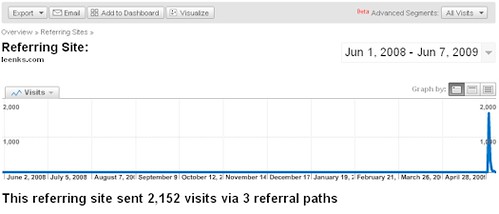
Videolicious.tv Traffic From Leenks.com - 06/08/09 by DavidErickson


robert shumake

FileMaker releases FileMaker Go updates for iPhone and iPad <b>...</b>

iLounge news discussing the FileMaker releases FileMaker Go updates for iPhone and iPad. Find more iPad news from leading independent iPod, iPhone, and iPad site.

Wednesday <b>News</b> « The Confluence

In news related to Michelle raising more money, the GOP seems to be short of it. Gosh, other than 8 years of a failed presidency, and then attacking the popular candidates and their supporters just as the Dems are doing, I can't imagine ...

Official Google Blog: Google <b>News</b> turns eight

Today we celebrate the eighth birthday of Google News. Not long after the tragic events of September 11, 2001, we started building and testing Google News with the aim of helping you find current events from a wide variety of global and ...


robert shumake

FileMaker releases FileMaker Go updates for iPhone and iPad <b>...</b>

iLounge news discussing the FileMaker releases FileMaker Go updates for iPhone and iPad. Find more iPad news from leading independent iPod, iPhone, and iPad site.

Wednesday <b>News</b> « The Confluence

In news related to Michelle raising more money, the GOP seems to be short of it. Gosh, other than 8 years of a failed presidency, and then attacking the popular candidates and their supporters just as the Dems are doing, I can't imagine ...

Official Google Blog: Google <b>News</b> turns eight

Today we celebrate the eighth birthday of Google News. Not long after the tragic events of September 11, 2001, we started building and testing Google News with the aim of helping you find current events from a wide variety of global and ...


Tuesday, September 21, 2010

Stock Making Money

09/10/10 North Weymouth, Massachusetts — Harrisburg, Pennsylvania, is defaulting; Half Moon Bay, California, is disincorporating; and the City of Miami, Florida, declared a “state of fiscal urgency,” then broke contracts with workers. Yet, Pennsylvania, California, and Florida municipal bond funds managed by Blackrock are trading at or near 52-week highs.


Short sales look timely. Still, there are advantages to a buy side study. First, when the time comes, the opportunities will be broader. Second, the decision to buy will be more a case of negation than attraction. Ruling out unsavory bonds when selecting what to buy will often replicate the process of choosing what to short.


Looking through the wreckage of the 1930s and of the 1970s, there was probably more money lost by premature investments than made by those who waited. This was on the short and long side. New York City is a case in point. Its bust in the 1970s was expected. The stock market had tumbled, a commercial real estate binge of unparalleled excess had desecrated the skyline (new commercial space constructed between 1968 and 1970 exceeded 100% of the city’s commercial building between the World Wars), and – this is as predictable as night following day – from 1968 to 1970, 18 of the largest U.S. corporations left the city and 14 more announced their departure. These included American Can, PepsiCo, General Foods, U.S Tobacco and Shell Oil. Over 1.1 million New Yorkers emigrated from the city in the early and mid-1970s.


In other words, it was so obvious that New York City could not pay its bills that it was too obvious. Anecdotally, there were more investors who shorted New York City too early than those who waited and made money.


By the mid-1970s all New York City bonds were trading for approximately $25 ($100 being par). This was 1933 again, when all City of Miami bonds (yields ranged from 4-3/4% to 5-1/2%, maturities from 1935 to 1955) were quoted at $26. In both cases, the market sulked; yet, in both cases, there were bargains for those who were willing to read legal documents. One such case will be discussed below.


All finance is a reenactment. In his seminal study, Municipal Bonds: A Century of Experience (1936), A. M. Hillhouse wrote: “The major portion of over-bonding by municipalities arises out of real estate booms.” As precedent, Hillhouse quoted H. C. Adams, who wrote in 1890 (Public Debts): “he bonding of a town, and the expenditure of the money procured in showy works, is the occasion of gain to those who speculate in real estate….” Hillhouse, having quoted Adams’ observations of a previous property-boom, municipal-bond bust, should have known better than to write: “There will be no justification for a city [in the future to use] the excuse… that its tax revenues have dried up in times of falling property values.” So, if you miss this one, your children will have the same opportunity.


As for the current wasteland, revenue bonds are a choicer flock to choose from than general obligation bonds. The following distinction between the two is extracted from my seminal study (The Coming Collapse of the Municipal Bond Market): “Revenue bonds are repaid using the revenue generated by the specific project the bonds are issued to fund (fees from a public parking garage, for example).” General obligation bonds are thought to be safer, at least they are advertised as such, because “they are backed by the full faith and credit of the issuing municipality. This means that the municipality commits its full resources to paying bondholders, including general taxation and the ability to raise more funds through credit. The ability to back up bond payments with tax funds is what makes general obligation bonds distinct from revenue bonds.”


However, it is not possible to draw blood from a stone and we will soon see municipalities that can not meet their bond commitments unless they discover an oil field larger than BP’s folly. Half Moon Bay, California, may already meet this ignoble state. From recent reports, the budget and books are so unintelligible that the city is disincorporating and may become an appendage to San Mateo County. Half Moon Bay’s bonds and yawning deficit will presumably be the burden of San Mateo County.


As a side note, the depth of incompetence on display in this instance would not be tolerated in a grammar school Citizenship Day. Given the state of the country, there will be even more amazing feats of fiscal suicide. Another participant is Standard & Poor’s, which stamped a AA- rating on $18 million of Half Moon Bay debt issued in 2009. Bondholders note: do not expect logic to guide negotiated workouts.


As for the bondholder, there are several difficulties here. Disincorporation has few if any legal precedents in California. (“It’s an option that hasn’t been tried in the state since 1972, when the tiny city of Cabazon (about 2,000 people) disincorporated.” – San Mateo County Times, August 27, 2010) The Cabazon precedent is not one to take on faith. Half Moon Bay and San Mateo County may have competing interests. A judge may have different ideas yet about how Half Moon Bay should resolve an $18 million lawsuit that the city lost related to development rights on a 24-acre property.


Just where do present circumstances leave the debt holder? That is, the owners of Half Moon Bay’s $18 million issue of Judgment Obligation bonds. And what of the free-for-all that follows? Propzero.com, jumping into the Half Moon Bay debate, suggests that disincorporation “may be the answer for many California cities struggling with too many spending commitments and not enough money. Digging out of budget holes may be harder than simply shutting things down.”


As goes Half Moon Bay, so goes the country, or so it seems. If San Mateo County is stuck with the Judgment Obligation bonds, and a large annual deficit, it is a sure bet the county will appeal to the state; Governor Schwarznegger will appeal to President Obama; and the president will appeal – to Congress?


It was easier to bottom fish among CDOs that were trading at $15 (as a group) in 2008 than to wager on these contingencies. Revenue bonds are comparatively easy to understand. In a large-scale, municipal-bond swoon, revenue bonds will sell off. That will be true even if these are water bonds, supported by the revenue that customers pay for services; even if these revenues cannot be touched by the grasping Yoga Instructors’ Union. (Half Moon Bay residents are distraught at the loss of municipal yoga instruction – San Mateo County Times.)


We return to New York City to note the lack of perceptiveness in a time of chaos. In April 1975, the city  defaulted on a short-term note. It missed an interest payment (maybe more than one, it isn’t clear). The coupon was eventually paid, but the “New York City default” was highly publicized.


The Municipal Assistance Corporation (MAC) was formed. In The Bond Book, Annette Thau explained that MAC bonds were not obligations of New York City: “The revenues to pay debt service were backed, not by the taxing power of the city, but by the state of New York, and by a special lien on the city’s sales tax and… on a stock transfer tax.” These were revenue bonds that initially yielded “10% as compared to 8% for securities with comparable rating and maturity.”


Thau went on to tell her readers that the winning team does its homework: “This episode demonstrates why it pays, literally, to be very precise about exactly which revenue streams back debt service. In this instance, MAC bonds were tarred by the woes of the city, even though they were not obligations of the city….”


Revenues used to pay MAC bondholders could not flow to the city until the coupons were already met. This is true of services in different municipalities today. Utilities often fall in this category. Advanced critical reading skills are a prerequisite to distinguish a $25 from a $75 bond.


What of critical services in municipalities without predictable sources of revenue? In July, Indianapolis, Indiana, decided to sell its water and sewer utilities. In August, San Jose, California, discussed privatizing its water utility. There are many other such discussions. The media reported both the Indianapolis and San Jose decisions as sales. From precedent, the transactions may be more complicated than that.


It would be unusual for a local government to relinquish all control. There are many different possible arrangements with investors. At one end, there have been attempts to issue corporate stock in the municipality. This was proposed in Coral Gables, Florida, during the 1930s. It did not work but investment bankers are more inventive today. (Or, maybe not. Assets to be pledged by Coral Gables included “the municipal golf course and club house, the Venetian pool, the Coliseum….” Maybe not the one in Rome, but investment bankers are inventive.)


Probably the most likely arrangements are Public-Private Partnerships. In such partnerships, the investor, a “concessionaire,” steps in after bonds stand no chance of repayment. These might be for a vital service such as a water system, airport, or toll road. Concessionaires pay off all or a portion of the debt in exchange for the right to operate the asset for a negotiated return. Internal rates of return generally fall between 13% – 20%. This is a very simplified description.


There are many other investment approaches that haven’t been mentioned. Those mentioned are merely outlined. If it is not obvious, it must be emphasized how preliminary this discussion has been before making an investment. The most important advice here, on the short or long side, is to be patient, to understand the documents of the security, the laws and covenants that bind related parties, and to know the history of municipal bond defaults. This will open the investor’s imagination to the most improbable scenarios.


Regards,


Frederick Sheehan,

for The Daily Reckoning


[For more of Frederick Sheehan's perspective you can visit his blogs here and at www.AuContrarian.com. You can also purchase his book, Panderer to Power: The Untold Story of How Alan Greenspan Enriched Wall Street and Left a Legacy of Recession (McGraw-Hill, 2009), here.]


Predicting the stock market is either impossible or extraordinarily difficult, so I generally refrain from doing so — in print. Even apparently successful investors who trade daily or weekly are wrong nearly as often as they are right. So with the caveat that the chances of my being right are at best not appreciably better 50–50, I wanted to share an optimistic scenario for the stock market over the next 2–3 years. 


Typically, a Democratic majority in the House of Representatives has been bad for the stock market and the economy and Republican control has been good (in the past, I have run, but not published, the numbers back to 1854). The reverse is generally true for the presidency. 


There have been two switches from Democratic to Republican control of the House since 1950: in the 1994 election and in the 1952 election. 


Cumulative returns in the S&P 500 over the two years following the 1994 Republican takeover (1995–96) were 69.8%. (The three-year returns for 1995–97 were a staggering 127.0% .) 


Cumulative returns in the S&P 500 over the two years following the 1952 takeover (1953–54) were 54.7%. (The three year returns for 1953–55 were 98.4% , but the Democrats retook the House in the 1954 election.)


Indeed, the best year for the S&P 500 since World War II was 1954 (56.0%), the second year after a Republican takeover of the House. The best year since 1976 was 1995 (38.5%), the year after the last Republican takeover of the House.


So will we get a huge stock market increase this time, as we have the last two times that Republicans have taken the House? Maybe, maybe not. 


If the Republicans take the House, why might we get a strong stock market?


(1) an end to disastrous new government efforts to stimulate the economy (or at least a significant slow down in such wealth-destroying efforts);


(2) a probable reduction in regulatory uncertainty; and


(3) a reduction in the odds for increased taxes (beyond the expiration of the Bush Tax cuts for those making over $250,000).


A strong stock market and a reduction in regulatory uncertainty would likely lead to robust economic growth — and eventually strong job growth. That would make the world a lot better for our students and our children.


I don’t expect that good economic policy will suddenly start coming out of Washington in 2011, but I do hope that the policies will not get increasingly worse, month by month. Though we will never know, I believe that, if the Federal Reserve and the Bush and Obama Administrations had done little else than lower interest rates, provide liquidity, and temporarily guarantee money market funds, we would have had a brief, sharp recession, followed already by robust GDP growth.


So why might this optimistic 2011–2013 scenario not happen? 


(1) the Republicans might not retake the House (the number of pick-ups needed is exceedingly large);


(2) the Republicans might act like the Democrats once they regain control, as they mostly did the last time they held sway;


(3) significant tax rate increases are already scheduled for 2011;


(4) because of tax increases, economic activity may have already been shifted from 2011 to 2010;


(5) a new carbon cap or tax may be imposed either by a lame duck Congress or by the EPA;


(6) regulatory uncertainties persist, especially over health care;


(7) two events (1952, 1994) are not enough to define an effect, especially since if one goes back further in time, this effect is not present. (The two-year returns following prior Republican takeovers of the House averaged just 5.6%.); and


(8) there were special circumstances in the 1953–55 period (end of the Korean War, worldwide post-WW2 boom) and in the 1995–97 period (computer revolution; end of the Cold War and expansion of economic freedom).


Ironically, if the Republicans retake the House and the stock market booms as it did after the 1952 and 1994 takeovers, such a strong recovery would greatly increase President Obama’s chances of being re-elected.


So what do I think about the stock market? At the moment at least, I am fully invested in US and foreign stocks and mutual funds — and I hope to remain so over most of the next two years, at least if the Republicans take the House and there are no major new pieces of economy-destroying legislation or EPA regulations. 


More Fallout Online art dribbles out MMO <b>News</b> - Page 1 | Eurogamer.net

Read our MMO news of More Fallout Online art dribbles out.

Newsy: The Story Behind its Innovative <b>News</b> App

Today we're starting a new interview series on ReadWriteWeb, focused on product innovation on the Web. I'll be interviewing a number of startup founders over the coming weeks, ...

Small Business <b>News</b>: Social Media and the Entrepreneur

Social media and entrepreneurship represent the perfect partnership in today's small business world. Free and easy to operate social media tools have made it.


robert shumake

More Fallout Online art dribbles out MMO <b>News</b> - Page 1 | Eurogamer.net

Read our MMO news of More Fallout Online art dribbles out.

Newsy: The Story Behind its Innovative <b>News</b> App

Today we're starting a new interview series on ReadWriteWeb, focused on product innovation on the Web. I'll be interviewing a number of startup founders over the coming weeks, ...

Small Business <b>News</b>: Social Media and the Entrepreneur

Social media and entrepreneurship represent the perfect partnership in today's small business world. Free and easy to operate social media tools have made it.


09/10/10 North Weymouth, Massachusetts — Harrisburg, Pennsylvania, is defaulting; Half Moon Bay, California, is disincorporating; and the City of Miami, Florida, declared a “state of fiscal urgency,” then broke contracts with workers. Yet, Pennsylvania, California, and Florida municipal bond funds managed by Blackrock are trading at or near 52-week highs.


Short sales look timely. Still, there are advantages to a buy side study. First, when the time comes, the opportunities will be broader. Second, the decision to buy will be more a case of negation than attraction. Ruling out unsavory bonds when selecting what to buy will often replicate the process of choosing what to short.


Looking through the wreckage of the 1930s and of the 1970s, there was probably more money lost by premature investments than made by those who waited. This was on the short and long side. New York City is a case in point. Its bust in the 1970s was expected. The stock market had tumbled, a commercial real estate binge of unparalleled excess had desecrated the skyline (new commercial space constructed between 1968 and 1970 exceeded 100% of the city’s commercial building between the World Wars), and – this is as predictable as night following day – from 1968 to 1970, 18 of the largest U.S. corporations left the city and 14 more announced their departure. These included American Can, PepsiCo, General Foods, U.S Tobacco and Shell Oil. Over 1.1 million New Yorkers emigrated from the city in the early and mid-1970s.


In other words, it was so obvious that New York City could not pay its bills that it was too obvious. Anecdotally, there were more investors who shorted New York City too early than those who waited and made money.


By the mid-1970s all New York City bonds were trading for approximately $25 ($100 being par). This was 1933 again, when all City of Miami bonds (yields ranged from 4-3/4% to 5-1/2%, maturities from 1935 to 1955) were quoted at $26. In both cases, the market sulked; yet, in both cases, there were bargains for those who were willing to read legal documents. One such case will be discussed below.


All finance is a reenactment. In his seminal study, Municipal Bonds: A Century of Experience (1936), A. M. Hillhouse wrote: “The major portion of over-bonding by municipalities arises out of real estate booms.” As precedent, Hillhouse quoted H. C. Adams, who wrote in 1890 (Public Debts): “he bonding of a town, and the expenditure of the money procured in showy works, is the occasion of gain to those who speculate in real estate….” Hillhouse, having quoted Adams’ observations of a previous property-boom, municipal-bond bust, should have known better than to write: “There will be no justification for a city [in the future to use] the excuse… that its tax revenues have dried up in times of falling property values.” So, if you miss this one, your children will have the same opportunity.


As for the current wasteland, revenue bonds are a choicer flock to choose from than general obligation bonds. The following distinction between the two is extracted from my seminal study (The Coming Collapse of the Municipal Bond Market): “Revenue bonds are repaid using the revenue generated by the specific project the bonds are issued to fund (fees from a public parking garage, for example).” General obligation bonds are thought to be safer, at least they are advertised as such, because “they are backed by the full faith and credit of the issuing municipality. This means that the municipality commits its full resources to paying bondholders, including general taxation and the ability to raise more funds through credit. The ability to back up bond payments with tax funds is what makes general obligation bonds distinct from revenue bonds.”


However, it is not possible to draw blood from a stone and we will soon see municipalities that can not meet their bond commitments unless they discover an oil field larger than BP’s folly. Half Moon Bay, California, may already meet this ignoble state. From recent reports, the budget and books are so unintelligible that the city is disincorporating and may become an appendage to San Mateo County. Half Moon Bay’s bonds and yawning deficit will presumably be the burden of San Mateo County.


As a side note, the depth of incompetence on display in this instance would not be tolerated in a grammar school Citizenship Day. Given the state of the country, there will be even more amazing feats of fiscal suicide. Another participant is Standard & Poor’s, which stamped a AA- rating on $18 million of Half Moon Bay debt issued in 2009. Bondholders note: do not expect logic to guide negotiated workouts.


As for the bondholder, there are several difficulties here. Disincorporation has few if any legal precedents in California. (“It’s an option that hasn’t been tried in the state since 1972, when the tiny city of Cabazon (about 2,000 people) disincorporated.” – San Mateo County Times, August 27, 2010) The Cabazon precedent is not one to take on faith. Half Moon Bay and San Mateo County may have competing interests. A judge may have different ideas yet about how Half Moon Bay should resolve an $18 million lawsuit that the city lost related to development rights on a 24-acre property.


Just where do present circumstances leave the debt holder? That is, the owners of Half Moon Bay’s $18 million issue of Judgment Obligation bonds. And what of the free-for-all that follows? Propzero.com, jumping into the Half Moon Bay debate, suggests that disincorporation “may be the answer for many California cities struggling with too many spending commitments and not enough money. Digging out of budget holes may be harder than simply shutting things down.”


As goes Half Moon Bay, so goes the country, or so it seems. If San Mateo County is stuck with the Judgment Obligation bonds, and a large annual deficit, it is a sure bet the county will appeal to the state; Governor Schwarznegger will appeal to President Obama; and the president will appeal – to Congress?


It was easier to bottom fish among CDOs that were trading at $15 (as a group) in 2008 than to wager on these contingencies. Revenue bonds are comparatively easy to understand. In a large-scale, municipal-bond swoon, revenue bonds will sell off. That will be true even if these are water bonds, supported by the revenue that customers pay for services; even if these revenues cannot be touched by the grasping Yoga Instructors’ Union. (Half Moon Bay residents are distraught at the loss of municipal yoga instruction – San Mateo County Times.)


We return to New York City to note the lack of perceptiveness in a time of chaos. In April 1975, the city  defaulted on a short-term note. It missed an interest payment (maybe more than one, it isn’t clear). The coupon was eventually paid, but the “New York City default” was highly publicized.


The Municipal Assistance Corporation (MAC) was formed. In The Bond Book, Annette Thau explained that MAC bonds were not obligations of New York City: “The revenues to pay debt service were backed, not by the taxing power of the city, but by the state of New York, and by a special lien on the city’s sales tax and… on a stock transfer tax.” These were revenue bonds that initially yielded “10% as compared to 8% for securities with comparable rating and maturity.”


Thau went on to tell her readers that the winning team does its homework: “This episode demonstrates why it pays, literally, to be very precise about exactly which revenue streams back debt service. In this instance, MAC bonds were tarred by the woes of the city, even though they were not obligations of the city….”


Revenues used to pay MAC bondholders could not flow to the city until the coupons were already met. This is true of services in different municipalities today. Utilities often fall in this category. Advanced critical reading skills are a prerequisite to distinguish a $25 from a $75 bond.


What of critical services in municipalities without predictable sources of revenue? In July, Indianapolis, Indiana, decided to sell its water and sewer utilities. In August, San Jose, California, discussed privatizing its water utility. There are many other such discussions. The media reported both the Indianapolis and San Jose decisions as sales. From precedent, the transactions may be more complicated than that.


It would be unusual for a local government to relinquish all control. There are many different possible arrangements with investors. At one end, there have been attempts to issue corporate stock in the municipality. This was proposed in Coral Gables, Florida, during the 1930s. It did not work but investment bankers are more inventive today. (Or, maybe not. Assets to be pledged by Coral Gables included “the municipal golf course and club house, the Venetian pool, the Coliseum….” Maybe not the one in Rome, but investment bankers are inventive.)


Probably the most likely arrangements are Public-Private Partnerships. In such partnerships, the investor, a “concessionaire,” steps in after bonds stand no chance of repayment. These might be for a vital service such as a water system, airport, or toll road. Concessionaires pay off all or a portion of the debt in exchange for the right to operate the asset for a negotiated return. Internal rates of return generally fall between 13% – 20%. This is a very simplified description.


There are many other investment approaches that haven’t been mentioned. Those mentioned are merely outlined. If it is not obvious, it must be emphasized how preliminary this discussion has been before making an investment. The most important advice here, on the short or long side, is to be patient, to understand the documents of the security, the laws and covenants that bind related parties, and to know the history of municipal bond defaults. This will open the investor’s imagination to the most improbable scenarios.


Regards,


Frederick Sheehan,

for The Daily Reckoning


[For more of Frederick Sheehan's perspective you can visit his blogs here and at www.AuContrarian.com. You can also purchase his book, Panderer to Power: The Untold Story of How Alan Greenspan Enriched Wall Street and Left a Legacy of Recession (McGraw-Hill, 2009), here.]


Predicting the stock market is either impossible or extraordinarily difficult, so I generally refrain from doing so — in print. Even apparently successful investors who trade daily or weekly are wrong nearly as often as they are right. So with the caveat that the chances of my being right are at best not appreciably better 50–50, I wanted to share an optimistic scenario for the stock market over the next 2–3 years. 


Typically, a Democratic majority in the House of Representatives has been bad for the stock market and the economy and Republican control has been good (in the past, I have run, but not published, the numbers back to 1854). The reverse is generally true for the presidency. 


There have been two switches from Democratic to Republican control of the House since 1950: in the 1994 election and in the 1952 election. 


Cumulative returns in the S&P 500 over the two years following the 1994 Republican takeover (1995–96) were 69.8%. (The three-year returns for 1995–97 were a staggering 127.0% .) 


Cumulative returns in the S&P 500 over the two years following the 1952 takeover (1953–54) were 54.7%. (The three year returns for 1953–55 were 98.4% , but the Democrats retook the House in the 1954 election.)


Indeed, the best year for the S&P 500 since World War II was 1954 (56.0%), the second year after a Republican takeover of the House. The best year since 1976 was 1995 (38.5%), the year after the last Republican takeover of the House.


So will we get a huge stock market increase this time, as we have the last two times that Republicans have taken the House? Maybe, maybe not. 


If the Republicans take the House, why might we get a strong stock market?


(1) an end to disastrous new government efforts to stimulate the economy (or at least a significant slow down in such wealth-destroying efforts);


(2) a probable reduction in regulatory uncertainty; and


(3) a reduction in the odds for increased taxes (beyond the expiration of the Bush Tax cuts for those making over $250,000).


A strong stock market and a reduction in regulatory uncertainty would likely lead to robust economic growth — and eventually strong job growth. That would make the world a lot better for our students and our children.


I don’t expect that good economic policy will suddenly start coming out of Washington in 2011, but I do hope that the policies will not get increasingly worse, month by month. Though we will never know, I believe that, if the Federal Reserve and the Bush and Obama Administrations had done little else than lower interest rates, provide liquidity, and temporarily guarantee money market funds, we would have had a brief, sharp recession, followed already by robust GDP growth.


So why might this optimistic 2011–2013 scenario not happen? 


(1) the Republicans might not retake the House (the number of pick-ups needed is exceedingly large);


(2) the Republicans might act like the Democrats once they regain control, as they mostly did the last time they held sway;


(3) significant tax rate increases are already scheduled for 2011;


(4) because of tax increases, economic activity may have already been shifted from 2011 to 2010;


(5) a new carbon cap or tax may be imposed either by a lame duck Congress or by the EPA;


(6) regulatory uncertainties persist, especially over health care;


(7) two events (1952, 1994) are not enough to define an effect, especially since if one goes back further in time, this effect is not present. (The two-year returns following prior Republican takeovers of the House averaged just 5.6%.); and


(8) there were special circumstances in the 1953–55 period (end of the Korean War, worldwide post-WW2 boom) and in the 1995–97 period (computer revolution; end of the Cold War and expansion of economic freedom).


Ironically, if the Republicans retake the House and the stock market booms as it did after the 1952 and 1994 takeovers, such a strong recovery would greatly increase President Obama’s chances of being re-elected.


So what do I think about the stock market? At the moment at least, I am fully invested in US and foreign stocks and mutual funds — and I hope to remain so over most of the next two years, at least if the Republicans take the House and there are no major new pieces of economy-destroying legislation or EPA regulations. 


Do you feel like your money is fading away..... by picsbyrita


robert shumake

More Fallout Online art dribbles out MMO <b>News</b> - Page 1 | Eurogamer.net

Read our MMO news of More Fallout Online art dribbles out.

Newsy: The Story Behind its Innovative <b>News</b> App

Today we're starting a new interview series on ReadWriteWeb, focused on product innovation on the Web. I'll be interviewing a number of startup founders over the coming weeks, ...

Small Business <b>News</b>: Social Media and the Entrepreneur

Social media and entrepreneurship represent the perfect partnership in today's small business world. Free and easy to operate social media tools have made it.


robert shumake

More Fallout Online art dribbles out MMO <b>News</b> - Page 1 | Eurogamer.net

Read our MMO news of More Fallout Online art dribbles out.

Newsy: The Story Behind its Innovative <b>News</b> App

Today we're starting a new interview series on ReadWriteWeb, focused on product innovation on the Web. I'll be interviewing a number of startup founders over the coming weeks, ...

Small Business <b>News</b>: Social Media and the Entrepreneur

Social media and entrepreneurship represent the perfect partnership in today's small business world. Free and easy to operate social media tools have made it.






Saturday, September 18, 2010

personal finance manager


Washington (CNN) - Fresh on the heels of Joe Miller's surprising win over Sen. Lisa Murkowski in the Alaska Republican Senate primary, the Tea Party movement is setting its sights on Delaware.


Now the Delaware Republican Party is taking heed – and taking on – the Tea Party-backed candidate in the state's Republican Senate primary, sparking a war of words between the state's establishment GOP and the Tea Party movement.


It's a race that pits conservative Tea Party favorite Christine O'Donnell against moderate Rep. Mike Castle, Delaware's former two-term governor and lone Congressman since 1993.


Both candidates' campaigns have become increasingly caustic, especially as Tea Party-backed candidates across the country have picked up win after win against GOP establishment candidates.


The Tea Party Express endorsed the conservative O'Donnell in July, and recently committed to spending at least six-figures in the state.


"We are launching an aggressive multimedia and multi-platform campaign to help propel Christine O'Donnell to victory, and we've only just begun," Amy Kremer, Chairman of the Tea Party Express, said in a statement.


The group originally planned to spend about $250,000 on the race, but is now considering expanding their presence with TV and radio ad buys in Philadelphia, said Tea Party Express political director Joe Wierzbicki.


A similar last minute media blitz by the Tea Party Express is credited with propelling Miller – a formerly little known candidate – to victory over Murkowski, the Republican Party-backed incumbent.


The group launched a series of TV and radio ads Thursday that support O'Donnell, and rail against Castle as a liberal candidate who "just keeps supporting the failed policies of Nancy Pelosi and Harry Reid."


It's a move that has the Castle campaign fighting back.


"Out-of-state interest groups have threatened to spend half a million dollars to fund the disgusting tactics being used by the O'Donnell campaign to make accusations," said Castle campaign manager Mike Quaranta.


Meanwhile, the Castle campaign has launched therealchristine.com, a site devoted to aggregating negative news about O'Donnell.


Tom Ross, state committee chairman of the Delaware Republican Party, defended the negative nature of the site. "The stories might not be flattering, but they are factual. ...Sometimes it is necessary to make sure that the facts get out there," Ross said.


O'Donnell has faced criticism over her personal finance issues and leftover debt from previous, unsuccessful bids for a Delaware Senate seat. She has also been accused of misstating the results of her run against Joe Biden.


When asked to clarify her remarks in an interview Thursday with radio host Dan Gaffney of WGMD, O'Donnell seemed to grow increasingly frustrated, and ultimately blamed her statements on a grueling campaign schedule.


Ross, who is backing Castle, said that O'Donnell's history is troubling.


"This is a group and candidate that clearly seem to have a problem with facts. It is shocking that they would come in and support a candidate of Christine O'Donnell's ilk," he said.


"It is sad that the group didn't investigate the candidate that they're supporting… and surprising they would take their supporters' money that they donated and squander it in such a fashion," Ross said.


Ross also questioned whether O'Donnell is capable of pulling off an upset similar to Miller's win in Alaska.


"In Alaska, it was that Joe Miller is an Ivy League grad, a war hero, excellent standing in the community," Ross said. "Look at Christine O'Donnell. She has none of those attributes. She is career politician. She's run unsuccessfully for Senate three times."


Yet, Wierzbicki criticized Ross for dismissing O'Donnell, calling her a true conservative.


" is everything that is wrong with the establishment of the Republican Party. He should be fired for serving to undermine a Republican candidate who stands on conservative principles. It's his job to advance all Republicans in the state of Delaware. Instead he has become a tool for those who wish to thwart the Republican Party platform and turn the GOP into a Democrat-lite outfit. We find him reprehensible and shameless," Wierzbicki said.


Republican Gov. Chris Christie of neighboring New Jersey endorsed Castle Thursday.


The winner will face Democrat Chris Coons in the race for Vice President Joe Biden's former seat.


When I first arrived in Japan in 1974, international investors widely expected the country to collapse, a casualty of the overnight quadrupling of oil prices to $12 and the global recession that followed. Japanese borrowers were only able to tap foreign debt markets by paying a 200 basis point premium to the market, a condition that came to be known as “Japan Rates.”

Hedge fund manager, Kyle Bass, says that the despised Japan rates are about to return. There is nothing less than one quadrillion yen of public debt in Japan today. A perennial trade surplus powered high corporate and personal savings rates during the eighties and nineties, allowing these agencies to sell their debt entirely to domestic, mostly captive investors Those days are coming to a close. The problem is that the working age population peaked in Japan last year, and the country is entering a long demographic nightmare (see population pyramids below).

This year, the Ministry of Finance will see ¥40 trillion in receivables, the same figure seen in 1985, against ¥97 trillion in spending. Interest expense, debt service, and social security spending alone exceed receivables. The tipping point is close, and when it hits, Japan will have to borrow from abroad in size. Foreign investors all too aware of this distressed income statement will almost certainly demand big risk premiums, possibly several hundred basis points. That’s when the sushi hits the fan.

To top it all, no one in living memory in Japan has ever lost money in the JGB market, so expectations are unsustainably high. Need I mention that Japan’s Q2 GDP growth came in at an arthritic 0.1 %, not exactly a performance to run up the flagpole?

Both the JGB market and the yen can only collapse in the face of these developments. I know that the short JGB trade has killed off more hedge fund managers than all the irate former investors and divorce lawyers in the world combined. Read about my own recent, futile attempt to sell these markets by clicking here at http://www.madhedgefundtrader.com/august-6-2010.html .

But what Kyle says makes too much sense, and the day of reckoning for this long despised financial instrument may be upon us. How much downside risk can there be in shorting a ten year coupon of under 1%. I have included a breakdown of Kyle’s portfolio below, which you should note, has absolutely no equities anywhere in the world. Is Kyle trying to show us the writing on the wall?

To see the data, charts, and graphs that support this research piece, as well as more iconoclastic and out-of-consensus analysis, please visit me at www.madhedgefundtrader.com . There, you will find the conventional wisdom mercilessly flailed and tortured daily, and my last two years of research reports available for free. You can also listen to me on Hedge Fund Radio by clicking on “This Week on Hedge Fund Radio” in the upper right corner of my home page.


dr. eric seiger how to lose weight fast penis extender

PressThink: &quot;Where&#39;s the Business Model for <b>News</b>, People?&quot;

Rants, links, blog news, and breaking wisdom from Jeff Jarvis, former editor, magazine launcher, TV critic, now a J-professor at CUNY. Always on top of new media things. Prolific, fast, frequently dead on, and a pal of mine. ...

Last Look: Style <b>News</b> You Might Have Missed (PHOTOS, POLL)

Welcome to the Last Look, where we round up the Style scraps that didn't make it to our news page this week. Click through and catch up on what else happened since Monday!

Denver Broncos <b>News</b> - Horse Tracks - 9/18/10 - Mile High Report

Your Daily Cup of Orange and Blue Coffee....Horse Tracks.


364 eyes of the world!!! by heritagefutures


Tuesday, September 14, 2010

personal finances help


Events of the last week have made the Deficit Commission an embarrassment. Co-Chair Alan Simpson is a one-man disaster movie, compulsively offending one key voting bloc after another. Commission member Paul Ryan faced an angry crowd over his anti-Social Security stance, while another Commissioner locked experienced workers out of a nuclear facility rather than provide retirement benefits.


That's right: He's cutting retirement benefits.


But if the political blowback is obvious, here's what isn't: The Commissioners who are determined to cut your Social Security benefits are going to enjoy their own retirements in comfort. Their own pension plans insulate them from the fears that many other Americans face, and they don't have the professional expertise that would help them understand those concerns. In fact, the Commission's only expert on retirement is Rep. Jan Schakowsky, and she apparently opposes benefit cuts. The rest of the Commission is dominated by people who've expressed their desire to cut Social Security, despite their own secure futures. Millions of working Americans who have contributed to Social Security all their lives will lose out if these Commissioners have their way.


Happy Labor Day.


Normally I consider it off-limits to discuss people's personal finances when discussing their political opinions. But these Commissioners' lack of subject matter expertise, along with their lack of empathy, is important. If you don't know much about the topic and are protected from the problem, what makes you credible? Their pre-established prejudices makes the situation even worse, and their own situations underscore the irony of their self-professed willingness to make "brave choices" - choices whose consequences will mean little or nothing to them.


The Commission's Social Security obsession is odd anyway, since the projected Social Security shortfall comes out to only 0.7% of GDP. Nevertheless, these Commissioners have made their benefit-cutting intentions plain, presumably because they want to offer up America's seniors as a sacrifice to the bond markets. So how will these would-be income-slashers for the elderly make out in their own golden years? They'll be golden.


Consider Commissioner Alice Rivlin. Rivlin co-authored a paper that called for raising the retirement age and other benefit cuts, and recently released a specious paper about "Saving Social Security." As a former HEW Undersecretary, CBO Director, White House Budget Director, and Federal Reserve Vice Chair, she will presumably enjoy a comfortable retirement supported by multiple public pensions. Says Rivlin: ""We can't get out of this problem without doing both spending cuts, especially slowing the growth of entitlement, and tax increases."


Experts on Social Security finance (including the long-time Chief Actuary for the program) flatly disagree with Rivlin, pointing out that an adjustment to the payroll tax cap would unquestionably be enough to get the job done. They have the numbers to prove it. So why does Rivlin, who does not have their expertise in this area, disagree? Go ask Alice.


Co-Chair Erskine Bowles brokered a deal with Newt Gingrich to cut Social Security in the 1990s, when he served as Bill Clinton's Chief of Staff. Before that he headed the Small Business Administration, so his government tenure presumably qualifies him for a Federal pension. If not, don't worry: He receives $425,000 per year in his current job running the public universities of North Carolina, and the people of North Carolina are presumably also funding a pension on his behalf. To his credit, Bowles pledged to donate $125,000 of his salary for need-based student funds - but then, he can afford it. As the son of a US Congressman, Bowles had the education and connections needed to make millions as an investment banker. The added income he earns today as a Board member for General Motors and Morgan Stanley will help, too - and his government experience undoubtedly helped him win those positions, too.


Republican Rep. Paul Ryan, an aggressive advocate of Social Security cuts and privatization, will also enjoy his sunset years in comfort, thanks to a publicly-funded pension from his tenure as a Congressman. (He'll presumably earn even more as a result of his employment as an aide to two United States Senators.) Rep. Jeb Hensaerling has served as both a Representative and as an aide to Sen. Phil Gramm, so he should be safe from financial insecurity in his old age too .


The average annual pension payments for former members of Congress ranged from $41,000 to $55,000 in 2002, considerably more than the average $13,836 that Social Security recipients received in 2009. Yet neither Ryan nor Hensaerling have proposed cutting Congressional retirement benefits - nor should they. Sound pension plans like theirs were once available to most working Americans, and more effort should be made to restore them.


Former SEIU President Andrew Stern, who once might have been counted on to defend Social Security, recently sneered at Commission critics as "assassins of change" while saying that "all entitlements should be on the table." Mr. Stern's annual pension is $152,000 - and he retired at the age of 59, not 70. Nevertheless, Stern now publicly muses about "whether defined benefit pensions can really exist in the long run in a globalized economy."


Judd Gregg, who wants to raise the retirement age to 70, will receive a Federal pension for his Senate position. Gregg, like Alan Simpson, is the son of a Governor (self-made men, you might say), which means that public pensions also ensured that neither of them had to worry about supporting their aged parents. Tom Coburn, another would-be Social Security cutter, will receive a Congressional and Senatorial pension too.


David Cote, the CEO of Honeywell, provides some "private enterprise" perspective to the Commission's work. But Cote's wealth comes in part from Honeywell's government contracts, which exceed $4 billion annually. What's more, Cote's "free enterprise" ethic didn't stop him from making sure that Honeywell grabbed a few million in stimulus money from the taxpayers, too. A few billion from the Pentagon here, a few million more from Uncle Sam there - that'll plump up the nest egg a little for Mr. Cote's sunset years.


Cote made the headlines this week when Honeywell locked out the union workers at a nuclear power plant over a labor dispute - even though the workers agreed to stay on the job to protect public safety. Instead, Cote hired replacements and put them through a pared-down training process. The image of Homer Simpson comes to mind, pushing the wrong buttons and spilling beer on the reactor console - which would presumably make Cote Mr. Burns.


But it's no joking matter. Apparently there's real danger, which is why the Nuclear Regulatory Commission reportedly stepped in to block Honeywell from distilling uranium with its crew of replacement workers And what are the union and Honeywell arguing about? Honeywell's raising health care costs - and eliminating retiree pension plans for new workers.


That's right. A member of the Commission that's pretending to judge our retirement security with impartiality would rather have hastily-trained amateurs handle nuclear materials than bargain openly with his workers - about their retirement. D'oh!


As for Simpson (Alan, not Bart), to say that he suffers from "political Tourette's syndrome" would be a disservice to Tourette's sufferers. Most of them don't really say socially objectionable things, and those who do (it's called "coprolalia") don't mean what they say. But Simpson does. By attacking senior citizens as "greedy geezers," then offending women with his "milk cow with 100 million tits" comment, and now offending veterans' groups, Simpson has now hit the voting bloc trifecta.


And Cote's outraged labor, a fourth group. But the problem isn't Simpson anymore, or Cote for that matter. It's the Commission itself. The coprolalic curmudgeon Simpson has done a service to the nation. He's drawn attention to the Commission, and to the anti-Social Security biases held by so many of its members - all of whom will retire in comfort, thanks to those whose benefits they would cut. It's the comfortable afflicting the afflicted.


If these Deficit Commission members want their recommendations to have any credibility, they should pledge to live on the same Social Security benefits that they would impose for other Americans. Better yet, they should dedicate themselves to helping provide every American with the kind of retirement security they enjoy. That was part of the social contract this nation embraced during its years of greatest economic growth, the fulfillment of a promise that a lifetime of work should never end with years of deprivation. They should be working to restore that contract, not erode it even further.


One thing is clear: This Commission has no business making recommendations about Social Security.


(Sign a petition asking Congress and the President to protect Social Security from the Deficit Commission. Roger Hickey has more here.)


Additional links:


* Sam Seder and I discussed Social Security this week while co-hosting The Young Turks.


* For further reference on the Commission's members and their biases, see Firedoglake and Talking Points Memo.


* House Democrats are vowing to protect Social Security from any cuts. The polls show why that's a very wise idea.


I am a 25 year old college student (school, job + savings, back to school… long story) and boy do I wish I knew about all the resources available to me back then. Good for you for starting early!


Lucky for me I have 1 parent (divorced) who is so bad with money that I have been scared into financial responsibility from a young age. Was I perfect? Hahaha.. but I am doing better than 95% of my friends are right now so I guess I am doing something right?


Here is my advice:


1. GET A JOB! - 2 shifts a week is all it takes. I have friends who just graduated from college without ever having a job. Result? No work experience so nowhere will hire them. Some had problems even getting an internship! Try for customer service jobs. Employers value people skills more than flipping burgers.


2. BUDGET! - Cant teach an old dog new tricks so it is best to start young. Add up your monthly expenses such as rent/insurance/cell/gas/etc and divide by 2 or 4 (depending on weekly/bi-weekly payday). Put this money in savings and no touchy! Once you can live on that budget a certain % for an emergency fund and then % for savings. The rest is your “fun” money. As others have said: pizza, ipods, and clothes are “fun money” and NOT emergencies!


3. DEBIT, CREDIT, or CASH?


DEBIT- I am a die hard debit card user. My credit union has detailed (free) online banking. I check my online bank statement in the morning and at night and go over my spending. Think of it as an instant virtual slap in the face about your spending habits. It hurts for the best.


CASH - Some people just cant be responsible enough to respect the plastic and do better with cash. Try and keep bigger bills on you. Breaking a $5 is less mentally painful than breaking a $20. $1s are dangerous. That can of coke is “only $1″. $7 a week, $30 a month. It adds up.


CREDIT - Many say don’t get a credit card, but I disagree. If you are responsible college is a great time to build credit (unless you have some serious control issues… if that is the case, these are not the droids you are looking for…). Not building credit early is the BIGGEST regret I have. Good credit means better rates when buying a house or a car. Do your research first. Consider a student, or if you have to a secured card.


More about credit-


*Do NOT apply for a credit card on campus. It is like selling your soul for a candy bar. Every time you apply for a credit card they run a credit check, which “pings” you. Too many pings hurts your credit score. Not good. Friend did that at every kiosk that offered something free to sign up when she was 20. This was 7 years ago and her credit is still recovering! The same is true for store credit cards. Do.Not.WANT!

*Pick a required expense, such as gas or cell phone bill and put it on the credit card. Pay off the card at the end of each month. Repeat.

*Do NOT use your credit card to buy “fun money” purchases. No clothes, no ipods, no pizza. This is why you have your debit card of cash. Don’t even think about it mr.!


4. EATING/DRINKING - This is going to be the weird random one from one young person to another.(Part of this only applies to you on/after your 21st birthday!) The young person’s life revolves around being social. For a 20 something this normally involves dinner and/or drinks with friends. It is expensive! So much money can be saved if you plan ahead!


*Eating - Going out to eat is a much needed social experience but NEVER go out to eat starving! Just like you don’t go shopping when you are hungry you never want to experience the whole “eyes bigger than stomach” thing while dining out. Have a snack an hour or so before you meet friends for dinner. This will help you avoid ordering that $8 appetizer! Also, try and order things that reheat or are good cold. LEFTOVERS! Also, water is free. It is good for you! Coke is $3. Go buy yourself a 12 pack and have one when you get home.


*Drinking - Most 20 somethings drink. It is a very expensive part of our lives. It is a social event to help us forget about school and work. We like bars. Unfortunately $5 for a beer is highway robbery! NEVER go to a bar completely sober (when you are 21+ & no drinky + drivey!). Have a drink or 2 at home and then have a beer at the bar. You will save TONS. Also, bring cash to a bar. Only bring as much cash as your sober self would like to spend. Alcohol impairs judgment. Sober you will thank drunk you for not spending. Drunk you will thank sober you for being smart enough to make sure you can afford the advil to take care of that hangover the next day. It is a win win.


Put all that saved food and drink money towards something that will last.


5. BOOKS - Buy used whenever possible. Check online first because campus stores are normally a ripoff. Try and sell the books back online, even if they have released a new edition. Most student book stores on campus will only give you 1/2 of what someone online will be willing to give you!


6. CARS - Buy used and reliable, but not “cheap”. New cars lose tons of value when you drive them off the lot. Don’t buy a “cheap” used car on it’s last leg. Think Goldilocks - not too new, not too old, juuusssttt right! Save up as much money as possible. Pay for it in cash if you can. If not, save up at least 2/3 before purchasing and do your homework!


And whatever you do: AVOID parking tickets, speeding tickets, registration fines.. may as well light the money on fire! Or if you do not want it I will give it a nice home and save you the trouble.


penis extender

Bloomberg <b>News</b> Hops Aboard Yahoo Finance

Perhaps to get a piece of its 45.6 million monthly uniques?

Twitter To Look More Like Facebook&#39;s <b>News</b> Feed

We're trying not to be the type of people who hate change just because it's change.

Fox <b>News</b> Poll: Rubio Way Ahead In FL-SEN Race | TPMDC

The new Fox News poll of the Florida Senate race has very good news for Republican Marco Rubio, with him holding a commanding lead over independent Gov. Charlie Crist and Democratic Congressman Kendrick Meek.


12th Annual Charity Golf Tournament benefitting the Eureka Camp Society-Apex Secondary School-presented by SNC LAVALIN Pacific Liaicon and Associates Benefitting the Eureka Camp Society-Apex Secondary School photos by Ron Sombilon Gallery (374) by Ron Sombilon Gallery


internet marketing course

Bloomberg <b>News</b> Hops Aboard Yahoo Finance

Perhaps to get a piece of its 45.6 million monthly uniques?

Twitter To Look More Like Facebook&#39;s <b>News</b> Feed

We're trying not to be the type of people who hate change just because it's change.

Fox <b>News</b> Poll: Rubio Way Ahead In FL-SEN Race | TPMDC

The new Fox News poll of the Florida Senate race has very good news for Republican Marco Rubio, with him holding a commanding lead over independent Gov. Charlie Crist and Democratic Congressman Kendrick Meek.


big white booty

12th Annual Charity Golf Tournament benefitting the Eureka Camp Society-Apex Secondary School-presented by SNC LAVALIN Pacific Liaicon and Associates Benefitting the Eureka Camp Society-Apex Secondary School photos by Ron Sombilon Gallery (374) by Ron Sombilon Gallery